
Adolescent Pregnancy in Rwanda’s Refugee Camps: A Case of Disempowerment
Media
Image
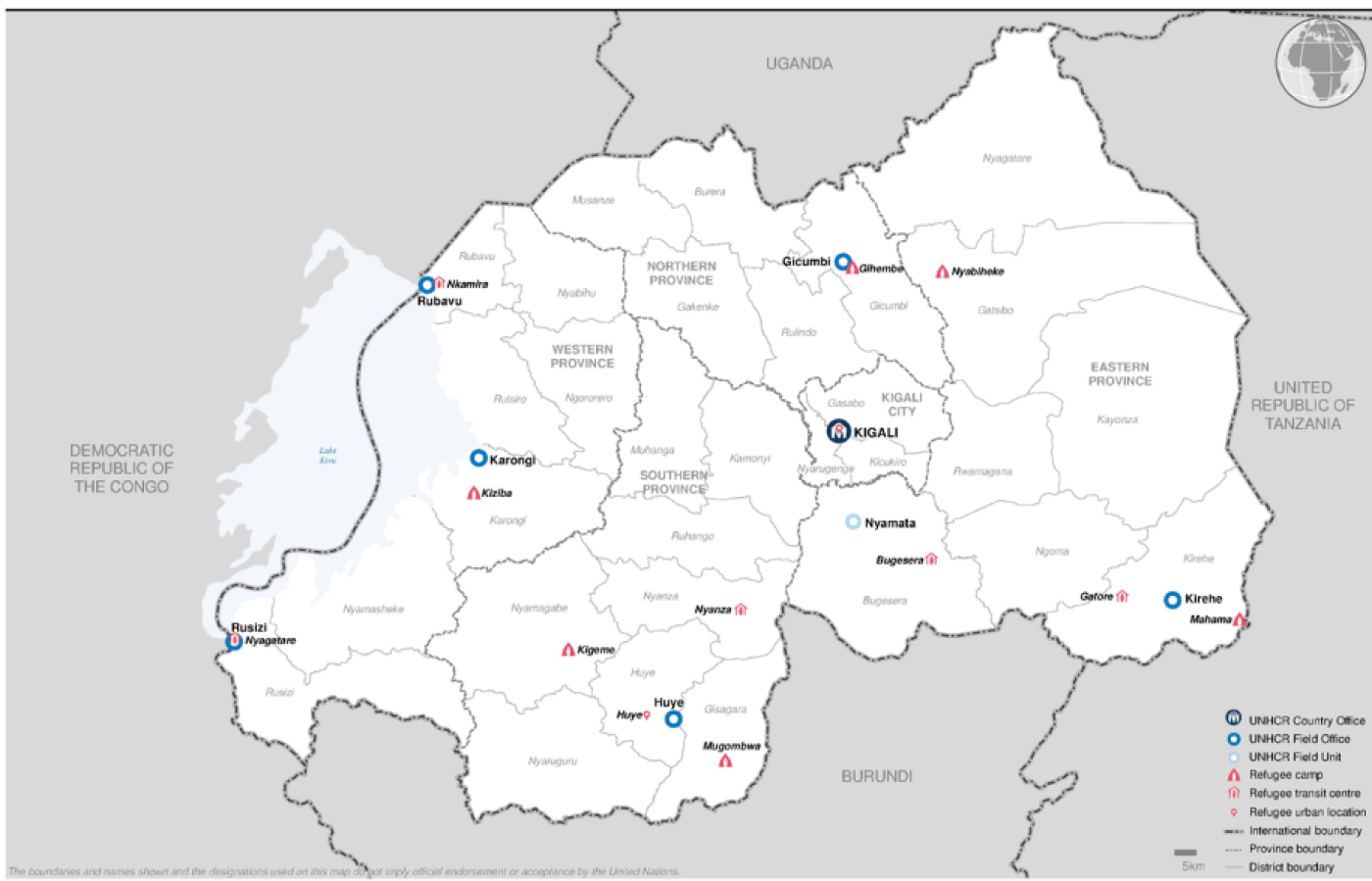
Media description
United Nations High Commissioner for Refugees (UNHCR) presence in Rwanda (UNHCR, 2016a)Blog content
By Dorothy Williams, Refugees, Health and Humanitarian Action course student, SPS 2021-2022 academic year
For many people around the world, pregnancy is a challenging experience. For encamped refugee girls in Rwanda, pregnancy is not only a challenge, but an extreme hardship made difficult by constant stigma, exclusion and limited access to health and economic resources.
Adolescent pregnancy is a critical area of refugee health and well-being. Not only because it is one of the most significant health issues facing young refugee populations (Urindwanayo & Richter, 2020), but also because target 3.7 of the Sustainable Development Goals cites adolescent pregnancy as a key indicator of universal access to reproductive and sexual health-care services.
Rwanda currently hosts over 127,000 refugees across six camps (UNHCR, 2021), the majority of whom are Burundian and Congolese. With the overwhelming presence of international non-governmental organisations in Africa, the priorities of humanitarian aid are rarely based on the needs and wants of encamped child refugees themselves. The type and organisation of support offered is instead based on outsourced information. This has been the case in Rwanda where the sexual and reproductive health (SRH) needs of children are not currently being met even though 96% of encamped refugee children reported adolescent pregnancy as the main threat to child protection across Rwanda’s refugee camps (InfoAid, 2013).
The rates of adolescent pregnancy in Rwanda’s refugee camps have been increasing in recent years, especially among girls aged 13-15 (Ruzibiza, 2021a). Sustained poverty and a lack of SRH education are both main reasons for this increase. Sadly, the socioeconomic impact of COVID-19 on encamped refugees in Rwanda has only exacerbated the issue (UNHCR, 2020).
In Rwanda’s camps, there are few economic opportunities for refugees, meaning that most refugees rely on small stipends of around $8 a month (Mckenzie, no date). This stipend is not nearly enough to support the needs of most families. As such, children will often engage in transactional sex to supplement income (Urindwanayo, 2021). Girls will have sex with adolescent boys and men in exchange for items like money, shoes, and make-up to put themselves or their families in a better economic position. This sexual exploitation enhances power dynamics within Rwandan refugee camps whereby young women and girls become increasingly disempowered. The lack of SRH education critically impedes any sort of preventative actions adolescents may take in these situations to avoid pregnancy.
Adolescent pregnancy is associated with a range of health risks. Physical health risks such as delivery complications, severe neonatal conditions, and maternal mortality are exacerbated in Rwandan refugee camps where there is poor nutrition and sanitation, and few health facilities and medical personnel (Papri et al., 2016; UNHCR, 2020). The mental health risks are arguably just as debilitating as physical health risks in this context. The breakdown of interpersonal and family relationships and anxiety around taking care of a child as a young girl in a camp environment can create a pervasive sense of hopelessness and suicidal intent (Ingabire & Richters, 2020).
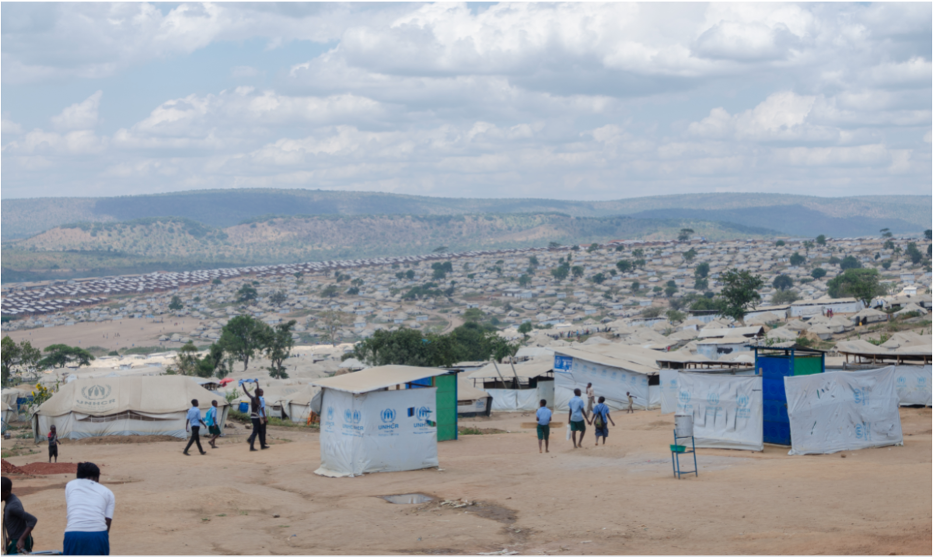
In Rwandan refugee camps, adolescent pregnancy is not only a matter of physical or mental health but a question of cultural and moral standing. Across many cultural groups within the camps, adolescent pregnancy is a violation of moral norms and viewed as sinful, shameful, and a result of decreased connection to traditional and cultural values (Ruzibiza, 2021b; Urindwanayo, 2021): “They are a shame to our community… you’ll see for yourself, our children acquired bad manners…that’s why there are a lot of pregnant teenagers here” (quote by an adult refugee in Mahama refugee camp; Ruzibiza, 2021b, p. 766). these young girls have to face not only their changing bodies and minds during pregnancy, but also social ostracism from their communities. Through no fault of their own, their entire identity is called into question.
This level of stigma associated with adolescent pregnancy often results in girls dropping out of school. Despite gender-inclusive education policies such as Rwanda’s 2008 Girls’ Education Policy, which states it is compulsory for girls who drop out of school due to pregnancy to return, dropout numbers of encamped pregnant adolescents are high (Ruzibiza, 2021b). Some refugee parents in Rwandan camps support the idea of excluding pregnant girls from schooling as a form of punishment; they feel allowing this group to continue schooling only encourages and perpetuates the problem (Ruzibiza, 2021b). Others acknowledge that
education for encamped young people should be a universal right, rather than a prize for “good” behaviour. Pregnant adolescent refugees should be given more support, not less. Exclusion from school is merely maintaining a cycle of gender disparity in Rwanda’s camps.
Though there are few large-scale interventions addressing adolescent pregnancy in Rwandan refugee camps, the Health and Empowered Youth project, implemented in 2020 across all of Rwanda’s refugee camps, aims to empower vulnerable adolescents by enhancing their SRH, access to socio-economic opportunities, and education (United Nations Population Fund [UNFPA], 2021a). Under the project, vulnerable youth have been economically empowered through micro-enterprise start-ups such as pig-rearing, and sexually empowered through the implementation of youth-friendly services and SRH program activities including peer education approaches to condom distribution and awareness-raising (UNFPA, 2021a; UNFPA, 2021b; UNFPA 2021c). Though encouraging, this is only a fraction of the SRH support needed in Rwanda.
Similar previous initiatives have also been met with resistance from refugee parents in Rwanda – “Instead of helping us to discipline, they help us to understand that it is the rights for a child” (quote from the parent of a pregnant teenager in Kigembe refugee camp; Urindwanayo, 2021, p. 73). To ensure buy-in, current and future projects should ensure a collaborative approach to interventions.
Adolescent pregnancy in Rwandan refugee camps represents a loss of health, economic, socio-cultural, and moral capital. A loss of this scale is undoubtedly debilitating. Considering almost half of the world’s refugees are children (United Nations Children’s Fund, 2021), adolescent pregnancy is not only significant in the Rwandan context, but also in the global context, and requires priority in humanitarian action.
References
InfoAid (2013) Child protection KAP survey in Rwandan refugee camps. Available at: https://www.avsi.org/upload/publication/0/24.pdf?_636348590910931508
Ingabire, C. and Richters, A. (2020) ‘Suicidal ideation and behavior among Congolese refugees in Rwanda: contributing factors, consequences, and support mechanisms in the context of culture’, Frontiers in Psychiatry, 11, p.299. doi:10.3389/fpsyt.2020.00299
Mckenzie, H. (no date) Building the economy within Rwanda's refugee camps. Available at: https://www.kiva.org/blog/building-the-economy-within-rwandas-refugee-camps
Papri, F. S., Khanam, Z., Ara, S. and Panna, M. B. (2016). Adolescent pregnancy: risk factors, outcome and prevention. Chattagram Maa-O-Shishu Hospital Medical College Journal, 15(1), pp.53-56. doi:10.3329/cmoshmcj.v15i1.28764
Ruzibiza, Y. (2021a) ‘Silence as Self-care: Pregnant Adolescents and Adolescent Mothers Concealing Paternity in Mahama Refugee Camp, Rwanda’, Sexuality & Culture, pp.1-18. doi:10.1007/s12119-021-09928-4
Ruzibiza, Y. (2021b) ‘‘They are a shame to the community…’ stigma, school attendance, solitude and resilience among pregnant teenagers and teenage mothers in Mahama refugee camp, Rwanda’, Global Public Health, 16(5), pp.763-774. doi:10.1080/17441692.2020.1751230
United Nations Children’s Fund (2021) Child displacement. Available at: https://data.unicef.org/topic/child-migration-and-displacement/displacement/
United Nations High Commissioner for Refugees (2016a) Where we work. Available at: https://www.unhcr.org/rw/where-we-work
United Nations High Commissioner for Refugees (2016b) Mahama: Now a safe haven for over 50,000 Burundian refugees. Available at: https://www.unhcr.org/rw/559-559.html
United Nations High Commissioner for Refugees (2020) Rwanda country refugee response plan. Available at: https://reporting.unhcr.org/sites/default/files/2021%20Rwanda%20Country%20Refugee%20Response%20Plan.pdf
United Nations High Commissioner for Refugees (2021) UNHCR Rwanda operational update – November December 2021. Available at: https://data2.unhcr.org/en/documents/details/90831
United Nations Population Fund (2021a) Empowering adolescents and young people to end teenage pregnancy and sexual violence in Rwanda. Available at: https://reliefweb.int/report/rwanda/empowering-adolescents-and-young-people-end-teenage-pregnancy-and-sexual-violence
United Nations Population Fund (2021b) Unstoppable adolescents and young people rising to greatness in Kigeme refugee camp. Available at: https://rwanda.unfpa.org/en/news/unstoppable-adolescents-and-young-women-rising-greatness-kigeme-refugee-camp
United Nations Population Fund (2021c) Rwanda: Empowering young people in Gihembe and Mahama refugee camps. Available at: https://rwanda.unfpa.org/en/news/rwanda-empowering-young-people-gihembe-and-mahama-refugee-camps-reach-their-full-potential#:~:text=Launched%20in%20August%202020%2C%20the,in%20Rwanda%20to%20access%20education
Urindwanayo, D. (2021) ‘Exploring The Culture of Teenage Pregnancy in a Refugee Camp in Rwanda. Ph.D. Thesis. University of Alberta. Available at: https://era.library.ualberta.ca/items/53ed0261-8336-480b-a1d1-6f1bab00907b
Urindwanayo, D. and Richter, S. (2020) ‘Teenage pregnancy in refugee camps: A narrative synthesis’, Journal of International Women's Studies, 21(1), pp.255-270. Available at: https://vc.bridgew.edu/jiws/vol21/iss1/20/